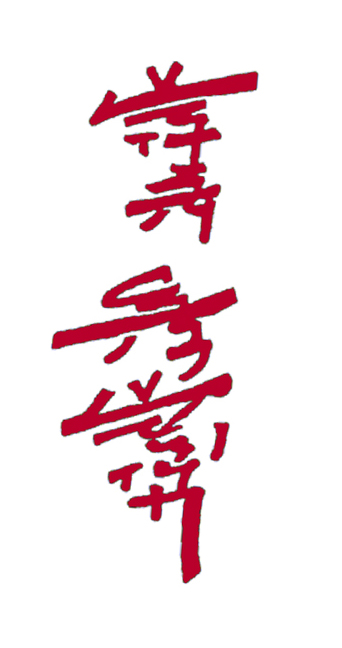
Silkisondan Karate Student’s Oath
A Reflection on Purpose, Training, and Living
As we step into 2026, I feel it is the right moment to bring together the full picture of what I have always intended to pass on to every student who has trained with us—both in the past and those who will come in the future. That picture is embodied in the Silkisondan Karate Student’s Oath.
Between 1980 and 1982, I worked closely with one of my early black belts and a dear friend, Mike Thompson. Together, we spent countless hours discussing, questioning, and refining what a student’s oath should truly represent. Our goal was never to create something ceremonial or repetitive, but rather something meaningful—an oath rooted in lived experience, responsibility, and the deeper purpose of martial arts.
My own foundation began much earlier.
As a young child growing up in Vietnam, I read articles and books that spoke of the founder of Karate. In 1964, when Karate was inaugurated as part of the Olympic Games, I was ten years old. At that age, my understanding of Karate was very simple—but deeply impactful. It centered on gratitude.
In my karate school, I saw a photograph of the founder, Gichin Funakoshi (1868–1957). I was taught to respect him—not merely as a historical figure, but as a teacher whose spirit lived on through the art. Gratitude and respect were introduced to me before technique or rank.
Not long after the Olympic event, I learned about other masters who chose to leave cities and train in isolated places—mountains, remote areas, and quiet surroundings. Curious, I once asked one of my masters what kind of training these individuals were truly seeking.
I was told that their isolation was not for physical conditioning, but for something far more profound: to unfold and understand what they themselves were made of.
That lesson stayed with me.
I have carried it throughout my life, and I promised myself that I would pass it on to others in any way I could.
The Silkisondan Karate Student’s Oath reflects the training path and living philosophy of those masters.
They dedicate themselves fully to Karate training.
They master their art through the fundamentals: basics, patterns, and free fighting.
In philosophy, character is the guiding direction from which intelligence, control, and discipline naturally develop.
They show respect—to everyone within their school, to others outside of it, and to the community at large.
They understand that every school has its own rules and traditions; when you step into a school, you are expected to honor and follow them.
Lastly, they know that respect and rank are not given—they are earned.
Every time I hear our students recite the Student’s Oath, I feel that each one is quietly offering gratitude to the masters who came before them—and making a personal commitment to follow in their footsteps, not only in training, but in life.
It is, in truth, a daily and lifetime gift to my students.
I remain,
Master Thinh